Our Living Laboratories
Four Streams of Field Inquiry
Field Literacy is not a classroom exercise; it is an immersion into the complex systems that sustain our world. We have organized our research and field investigations into Four Specialized Streams, each representing a critical intersection of economy, ecology, law, and human infrastructure. From the deep hum of cicada of pristine forests to the metabolic pulse of our cities, these streams provide the framework for our learners and partners to map and audit – qualitatively and quantitatively – and understand the ground reality. Each stream will have a list of case studies/fieldworks to choose from.
Through these streams, learners move beyond passive observation to interrogate the ground reality, transforming experiential learning into a rigorous act of scientific and social inquiry.
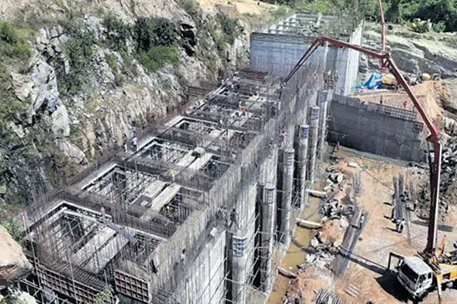
Green Stream
Forest & River System Governance
Evaluating Reservoirs, Hydroelectric plants, and River Diversion Projects in pristine forests and their impact on socio-environmental entities. Students analyze the delicate balance between hydraulic engineering, social & environmental costs, and forest & livelihood rights.
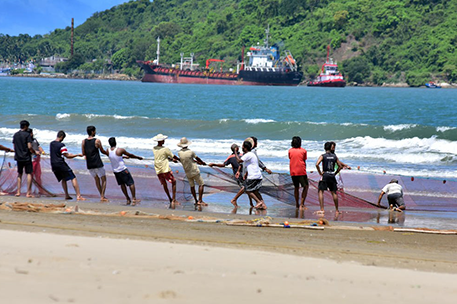
Blue Stream
Coastal Infrastructure & Resilience
Auditing Coastal Vulnerability and Infrastructure Resilience. Learners’ focus spans coastal ecology, livelihood fisheries, and climate adaptation, weighing the development with respect to Marine Ecology, the ‘Blue Economy’ and the socio-economic vulnerability of traditional coastal stakeholders.
Extractive Stream
Mining, Law & Resource Management
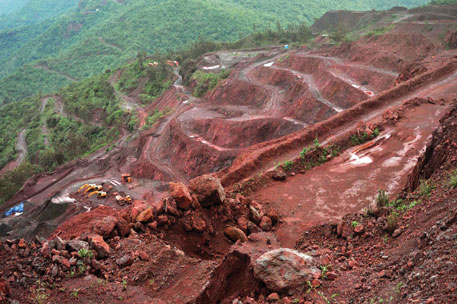
Analyzing the socio-legal and hydrological impact of mining and resource management. We provide field-based opportunities to learners to investigate on land-use changes, ecosystem fragmentation, sustainable mineral governance, and Constitutional safeguards like Panchayat Provisions in Scheduled Areas & Forest Rights Act for local stakeholders in mining zones.
Metabolic Stream
Urban Circular Economy, Consumption & Waste Cycles
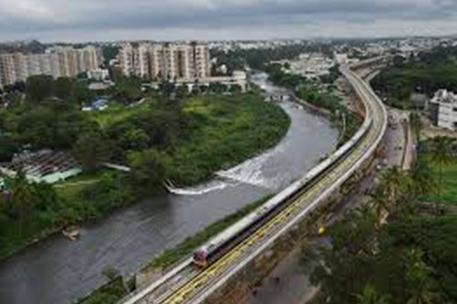
Auditing the ‘breathing’ of the city. We examine urban resource flows through the lens of power, water & waste cycles, emissions, and industrial ecology – evaluating the systems barriers to a socially just circular economy.
While the four streams remain common, students from different disciplines engage with them in distinct ways. Field Literacy Lab moves beyond the observational nature of standard experiential models, requiring learners to cross-examine theory with field-verified data. This table illustrates how FLL transforms multidisciplinary theory into inter-disciplinary inquiry based on field investigative practice. The table below illustrates these modes of engagement.
How FLL Streams Engage Graduate & Post-Graduate Students Across Disciplines
Discipline | Green Stream | Blue Stream (Coastal & Marine) | Extractive Stream | Metabolic Stream |
Engineering & Technology | Learn about river systems, climate, energy, and environmental systems and understand why green technologies often face challenges when applied on the ground | Study coastal and marine infrastructure such as ports and offshore projects, and how they affect ecosystems and local livelihoods | Examine mining and extraction technologies along with safety issues, environmental damage, and social impact | Understand how cities and regions function through systems like water, waste, energy, transport, and data |
Economics & Development Studies | Study the economic ideas behind sustainability, climate finance, and green growth, and their real-world trade-offs | Examine coastal economies like fisheries, tourism, ports, and how climate risks affect development | Analyse extraction in terms of revenue, inequality, regional development, and long-term costs | Study how urban economies work, including informal labour, resource use, and limits of circular economy ideas |
Management & Public Policy | Engage with climate-related policies, coordination between institutions, and gaps between policy and implementation | Explore coastal planning, disaster risk, infrastructure development, and protection of coastal livelihoods | Study regulation, corporate responsibility, and decision-making in extractive industries | Analyse how cities are managed, how services are delivered, and why systems often fail in practice |
Law & Regulatory Studies | Examine environmental laws, indigenous rights, climate-related cases, and challenges in enforcement | Study laws governing coastal zones, marine ecosystems, infrastructure clearances, and community rights | Analyse mining laws, land acquisition, consent processes, and regulatory loopholes | Explore laws related to cities, water & waste management, infrastructure, and emerging regulatory gaps |
Environmental Studies & Sustainability | Study ecosystems, biodiversity, peripheral communities, and climate impacts as part of complex human-nature relationships | Examine marine ecosystems, coastal degradation, climate vulnerability, and human dependence on the sea | Analyse environmental damage caused by extraction and the limits of restoration and mitigation | Study resource use, pollution, resilience, and sustainability challenges in everyday systems |
Humanities & Social Sciences | Explore how nature, environment, and development are understood through society, history, culture, and ethics | Study coastal communities, fishing livelihoods, displacement, and cultural identity | Examine labour, displacement, trauma, and the social history of extractive regions | Analyse everyday urban life and how people experience invisible systems like water supply, waste, transport, and infrastructure |
Journalism & Media Studies | Develop reporting that explains human dependence on forests and climate issues beyond events, focusing on systems and accountability | Produce in-depth reporting on coastal change, marine livelihoods, and governance | Engage in investigative journalism on mining, displacement, and power structures | Report on cities and infrastructure by making invisible systems and failures visible to the public |
Students may engage with one or more streams depending on their discipline, interests, and the nature of the problem being explored.
Initiate a Strategic Consultation.
Please provide your institutional details. Our partnership desk will reach out to schedule a formal briefing.
Field Literacy Lab (FLL) synchronizes academic rigor with ground-reality investigation to produce audit-ready co-curricular outcomes for the NCrF & equivalent state education policies ecosystem.
Field Literacy Lab is a proprietary programme.
©2026. Kesari Harvoo. All rights reserved.
#121, 11th Main, 9th Block, Nagarabhavi 2nd Stage, Bengaluru 560072. India. info@fieldliteracy.in +91 9448772067
About
Privacy Policy
Cookie Policy
Terms of Use
Terms & Conditions